
The smallest detail to catch is a pairing of two words: radio frequency and microneedling. Each half of the name describes a separate part of the device.
This journal covers skin care for Milton and Crabapple readers: sun damage, non-surgical firming, laser resurfacing and IPL or BBL photofacials. This page starts with the plain definition, then lists what to check in order.
The definition to start from
Cleveland Clinic describes radio frequency (RF) microneedling devices as using specially insulated needles that deliver high-intensity radio frequency energy into the targeted tissue under your skin. Read that sentence slowly. The needles and the energy are two parts of one device. For a wider view of firming, the American Academy of Dermatology has a page on many ways to firm sagging skin.
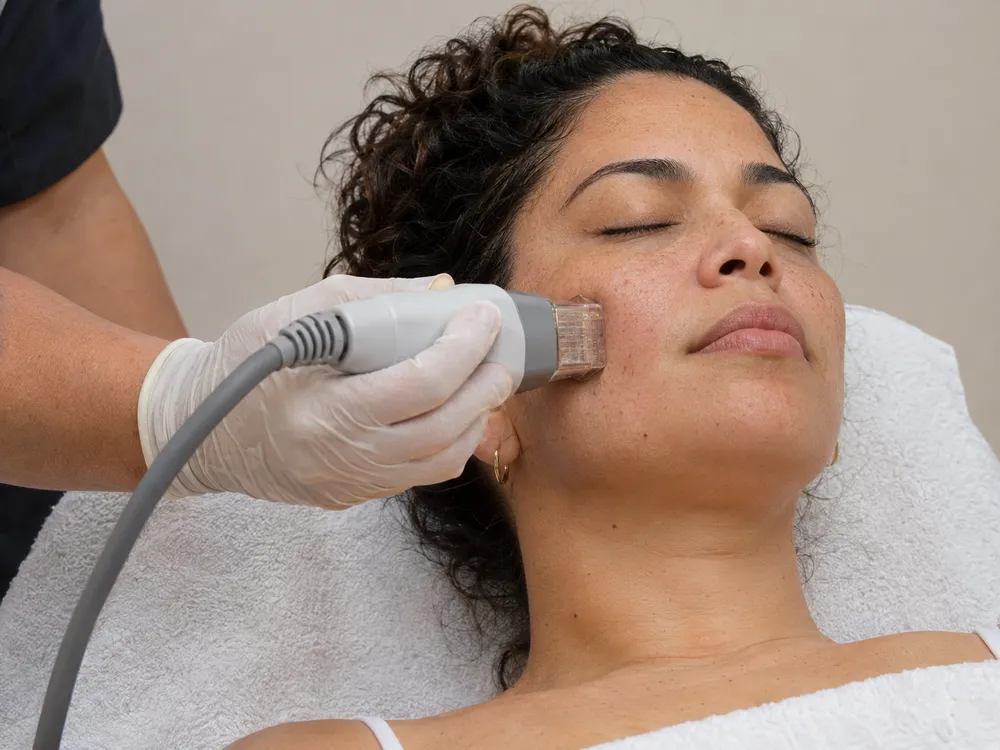
How to trace a menu line
Work through it in this order. Find the exact name of the device. Check that the line says radio frequency and not microneedling alone. Ask the clinic how it describes its needles. Then ask who operates the device.
Which questions need a professional
Reading definitions and comparing menu wording can happen at home. Whether this treatment suits your skin is a question for a licensed clinician. The American Academy of Dermatology also has a page on at-home microneedling, which is a separate question from a clinic visit.
What local menus show
OVME Alpharetta lists RF microneedling among its skin treatments. Thrive Medical Spa and The Aesthetic Company each list microneedling. The Beauty Barn lists it too. A menu line may say microneedling alone, so the radio frequency question is worth asking.
The one check to make this week
Take one menu line that says microneedling and ask the clinic whether radio frequency is part of it. For a comparison with a different firming technology, NCBI PMC hosts a study on high-intensity, parallel ultrasound tightening of facial skin.